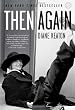
You are forty‑eight. You’re an artist preparing for your very first gallery showing, an exhibit pointedly titled Forty Eight for Forty Eight. And who’s responsible for pulling this whole thing together? Your mother. Yes, that mother — the one with whom your relationship is, shall we say, complicated at best. This is where the book opens and how we first meet Ellie, our main character.
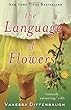
A little side note: on the very first page, the author mentions the language of flowers when she explains that Ellie’s mother, Lily, carries a name meaning innocence, purity, and beauty. If you haven’t read my post on the Language of Flowers, you might want to check it out. It’s astonishing how many books weave in floral symbolism, and how completely unaware I was of these meanings until I read that book.
The morning after the exhibit, Ellie gets a phone call from her father telling her that her mother is dead. She can’t take it in. She had just seen her mother — how could this be real? In the days that follow, her father asks her to pack up her mother’s things because he can’t bear to face it himself. While sorting through drawers, Ellie discovers her mother’s journal tucked away behind a lock. Inside, she meets a version of her mother she never knew — a woman shattered by a lost love, who locked her own soul away along with every want and desire she once had. As Ellie reads, she begins to understand something chilling: her mother had spent Ellie’s entire life training her to do the very same thing.
She begins to drift back to memories of her first true love — the very same man she had, coincidentally (or perhaps not), crossed paths with again at her exhibit. As those feelings resurface, she takes a long, unflinching look at her marriage and realizes she’s standing at a crossroads. Does she keep walking the path she’s been on for years, or does she dare to choose a new one?
I really enjoyed this book and its journey toward self‑realization. It turned out to be so much more layered than I expected. The story moves fluidly between the present day and the turbulent 1960s, weaving in themes of desegregation, identity, and the quiet ways we inherit our parents’ unfinished stories. It’s the perfect summer read.